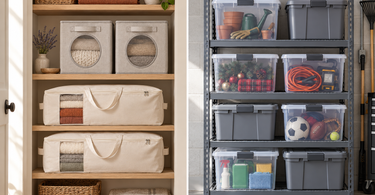
Walk down any storage aisle and you'll face the same choice: soft fabric bins or hard plastic tubs. Both hold things. But they protect what's inside in very different ways. Choose the wrong one and you can open a bin next spring to find yellow linens, a musty sweater, or a cracked lid.
Here's the short answer. Choose fabric for clothing, bedding, and anything stored inside your living space. Choose plastic for damp areas, heavy items, and things that need to be fully sealed. Most homes need some of both. The rest of this guide explains why, so you can decide bin by bin.
Side-by-side comparison
|
Fabric bins and bags
|
Plastic bins
|
|
|
Airflow
|
Breathable; lets moisture escape
|
Sealed; can trap moisture inside
|
|
Water protection
|
Resists dust and light splashes, not floods
|
Waterproof, especially with a gasket lid
|
|
Pest protection
|
Moderate; keep contents clean and check seasonally
|
Strong, especially against rodents
|
|
Weight
|
Light, easy to lift from high shelves
|
Heavier, and gets heavy fast when full
|
|
Strength and stacking
|
Best for light-to-medium loads; reinforced styles hold their shape
|
Rigid; stacks high under heavy loads
|
|
When empty
|
Folds flat
|
Takes the same space empty or full
|
|
Looks
|
Soft, textured, blends with furniture
|
Utilitarian; clear styles show clutter
|
|
Best places
|
Closets, under beds, open shelves, bedrooms
|
Garages, basements, attics, sheds
|
|
Best contents
|
Clothes, bedding, blankets, toys, linens
|
Tools, holiday decor, paperwork backups, heavy items
|
Where fabric bins win
Textiles need to breathe. Cotton, wool, linen, and down all hold a little moisture from the air. Sealed in an airtight container, that moisture has nowhere to go. Over months, it can lead to musty smells, mildew spots, and yellowing, especially if anything went in even slightly damp. A breathable fabric bin or bag lets that moisture escape while still keeping out dust and light.
They're lighter and easier to live with. A fabric bin on a top closet shelf is far easier to lift down than a full plastic tub. That matters if you reach for it every week.
They fold flat. Between seasons, or after a move, fabric bins collapse to a fraction of their size. Plastic tubs take up the same space whether they're full or empty.
They look like part of the room. On open shelves, in a nursery, or next to the bed, fabric reads as décor. Matching fabric cubes can make a whole bookcase look calm.
Where plastic bins win
We make fabric storage, and we'll still tell you: plastic is the better choice in some places.
- Garages, basements, and sheds. These spaces swing in temperature and humidity, and some flood. A gasketed plastic tub keeps water and pests out in a way fabric can't.
- Heavy or rigid items. Tools, books, and canned goods can bow a fabric bin. Plastic handles weight and stacks five high.
- Things that must stay sealed. Holiday décor in the attic and emergency supplies are good candidates for plastic.
One caution: plastic only protects textiles if they go in clean, completely dry, and cool. For long-term storage, wrap bedding or clothing in a cotton bag or pillowcase first. Then the plastic is a shell, not a sealed room.
Not all fabric bins are equal
"Fabric" covers a wide range of materials, and the label matters more than the look. Here's what to check:
Material. Cotton canvas is breathable, sturdy, and natural, which is ideal for bedding and wool. Linen breathes even more freely and releases moisture quickly, a natural fit for under-bed storage. Oxford fabric is tightly woven and hard-wearing, so it holds its shape and wipes clean, which suits everyday bins on open shelves. Non-woven fabrics are the budget option: light, but less durable. Read the composition, not just the product photos.
Structure. Reinforced side and bottom boards keep a bin square when full, so it slides on a shelf instead of slumping.
Stitching and edges. Double-stitched seams and finished piping hold up to years of pulling in and out.
A clear window. It's the simplest feature with the biggest payoff. You see what's inside without unzipping or pulling the bin down.
Handles. Sturdy handles on more than one side make a full bin easier to pull from a shelf or from under the bed.
Our cotton canvas storage bags are made from thick 100% cotton canvas. They have a clear viewing window and reinforced handles, and they're sized at 26" × 20" × 10" for comforters and blankets. If you'd like a little extra moisture resistance, our canvas comforter storage bags pair a cotton canvas exterior with a PE interior lining. That balances breathability with water resistance. And for under the bed, our linen under-bed storage bins are made from thick two-ply linen with reinforced sides that keep their shape.
Moisture is the real enemy
Whichever bin you choose, where you put it matters as much as what it's made of. Textiles store best at about 30 to 50 percent relative humidity. Above 60 percent, the risk of mold rises quickly. A simple digital hygrometer costs less than a takeout lunch and tells you whether a closet or basement is safe for linens.
Three habits prevent most storage disasters:
- Wash or clean everything before storing it. Body oils and food traces attract pests and can stain over time.
- Make sure it's completely dry. Let bedding cool to room temperature after the dryer before you pack it.
- Check in once a season. Open the bin, look for odors or damage, and refold anything stored long-term along different lines.
How to choose: five quick questions
- Is it fabric, leather, or bedding? Choose fabric or another breathable option.
- Is the space damp, unheated, or prone to flooding? Choose plastic, with textiles wrapped in cotton inside.
- Will a full bin weigh more than you'd like to lift overhead? Use plastic or a smaller bin.
- Will it be on display? Fabric looks better on open shelves.
- Do you need it to fold away later? Fabric collapses flat.
If most of your answers point to clothes and bedrooms, fabric is your default. To make sure it fits, read our guide on how to choose the right storage bin size.
Frequently asked questions
Are fabric storage bins good for clothes?
Yes. Breathable fabric lets moisture escape, which helps prevent musty smells and mildew. Store clothes clean and fully dry, and keep the bin in a dry room.
Do plastic storage bins cause mildew?
Plastic doesn't cause mildew, but it can trap moisture that does. Pack items completely dry, avoid damp locations, and consider a cotton liner or silica gel packs.
Can I use fabric storage bins in the garage or basement?
It's not ideal. These spaces are often humid and open to pests. Use sealed plastic there, and keep fabric bins in the climate-controlled parts of your home.
Are fabric bins strong enough?
Reinforced fabric bins hold their shape and handle everyday loads like clothing, toys, and linens well. Keep heavy items such as books and tools in rigid containers.
How do I clean fabric storage bins?
Vacuum dust regularly and spot-clean with mild soap and water. Always follow the care label, and let the bin dry fully before refilling it.
For the textiles you care about most, give them storage that breathes. Explore our cotton canvas storage bags and fabric storage cubes. Then see our best ways to store blankets for packing tips.
